

Memorial Day

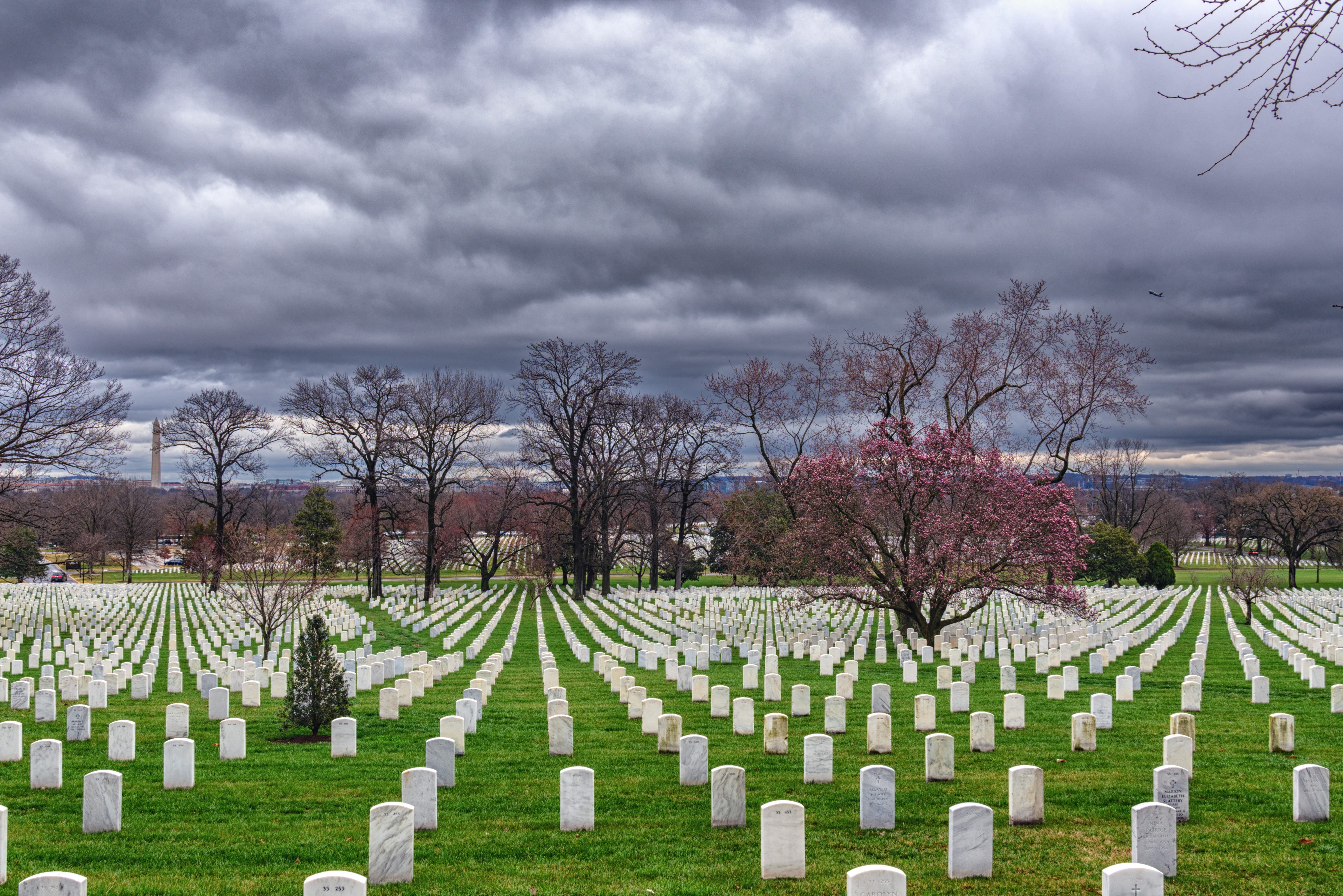
At the 11th hour of the 11th day of the 11th month of 1918, the guns fell silent across Europe and European countries embraced Remembrance Day to honor and remember the dead of World War I. Americans treat it as Veterans Day because we already had our Remembrance Day, which we call Memorial Day. So many men were killed in the Civil War that the nation first began Memorial Day observances, not celebrations, on May 30, 1868. Congress, in the 1960’s, affixed it to the last Monday in May.
More Americans died in the Civil War than all other American wars combined until, in the Obama Administration in the twenty-first century, the death toll of all others combined surpassed the Civl War.
May these United States remain united, though some wish for a great divorce. We have seen the cost and should not want it revisited.
A sight in camp in the daybreak gray and dim,
As from my tent I emerge so early sleepless,
As slow I walk in the cool fresh air the path near by the hospital tent,
Three forms I see on stretchers lying, brought out there untended lying,
Over each the blanket spread, ample brownish woolen blanket,
Gray and heavy blanket, folding, covering all.
Curious I halt and silent stand,
Then with light fingers I from the face of the nearest the first just lift the blanket;
Who are you elderly man so gaunt and grim, with well-gray’d hair, and flesh all sunken about the eyes?
Who are you my dear comrade?
Then to the second I step—and who are you my child and darling?
Who are you sweet boy with cheeks yet blooming?
Then to the third—a face nor child nor old, very calm, as of beautiful yellow-white ivory;
Young man I think I know you—I think this face is the face of the Christ himself,
Dead and divine and brother of all, and here again he lies.
— Walt Whitman, A Sight in Camp in the Daybreak Gray and Dim
Battle Hymn of the Republic
Mine eyes have seen the glory of the coming of the Lord;
He is trampling out the vintage where the grapes of wrath are stored;
He hath loosed the fateful lightning of His terrible swift sword:
His truth is marching on.
I have seen Him in the watch-fires of a hundred circling camps,
They have builded Him an altar in the evening dews and damps;
I have read His righteous sentence by the dim and flaring lamps:
His day is marching on.
I have read a fiery gospel writ in burnished rows of steel:
“As ye deal with My contemners, so with you My grace shall deal”;
Let the Hero, born of woman, crush the serpent with His heel,
Since God is marching on.
He has sounded forth the trumpet that shall never call retreat;
He is sifting out the hearts of men before His judgment-seat;
Oh, be swift, my soul, to answer Him! Be jubilant, my feet!
Our God is marching on.
In the beauty of the lilies Christ was born across the sea,
With a glory in His bosom that transfigures you and me.
As He died to make men holy, let us die to make men free1,
While God is marching on.
(Chorus)
Glory, glory, hallelujah!
Glory, glory, hallelujah!
Glory, glory, hallelujah!
Our God is marching on.
Sadly, some modern versions have changed the original lyric from “let us die to make men free,” to “let us live to make men free.” The original from Julia Ward Howe captured Christ’s sacrifice and alluded to the sacrifice of Union soldiers dying to liberate slaves. The modern version, unfortunately, undermines that allusion.
Thank you Eric. How beautiful the message and how fortunate we all are in this country for all the sacrifices made for us- Christ on the cross and the many men and women that have given their lives that we may enjoy a better life. ❤️🙏
🙏🙏🙏 Agree, cannot understand why people change that line from “Let us die to make men free “, write your own song if you do not like Julia Ward Howe’s, don’t pervert her meaning and sentiment. It might have been worth mentioning the circumstances under which she composed it. She and her husband were visiting one of the Civil War battlefields ( Appomattox if I remember correctly) and the soldiers were singing John Brown’s Body. Someone mentioned to her that the tune deserved better lyrics. She thought about it and composed these with the stub of a pencil she had. A copy of her original version still exists today. She sold it for $4 to the Atlantic Magazine where it was first published.